

A new application in the use of biometrics for identity verification is driving self-management and remote authentication for travelers that makes travel safer and easier with Seamless Travel technology.
This was the case of border control at train stations and airports for passengers traveling between the United Kingdom and Europe, which after the official enactment of Brexit became a complex process, due to the double verification of passports, which did not exist before and which increased control and boarding times.
La nueva exigencia de doble verificación implicó que la famosa compañía de trenes Eurostar se viera vio obligada a limitar la venta de billetes para el tren de las 6:01 a.m. de Londres a París a 550 pasajeros dejando 350 asientos vacíos como solución contra las largas filas de control para los viajeros que retrasaban la salida del tren.
However, a few months after Eurostar installed the Seamless Travel Seamless Travel technology for border control, it was able to streamline and improve the traveler experience by implementing biometrically validated digital travel credentials (DTCs) that enable remote identity verification and contactless border processing.
How does Seamless Travel technology work?
Eurostar adopted this solution as a fast, contactless, facial biometric check-in system that allows its passengers to check-in for their travel, passport and identity verification remotely and using their mobile devices. Being able to verify your identity prior to your trip greatly reduces check-in time at the transportation terminal and long lines.
With Seamless Travel, passengers arrive at the travel terminal and simply walk through a biometric corridor, with their digital travel credential already verified, through a secure, contactless and physical ticketless process that greatly reduces processing times at the terminal.
Benefits of Seamless Travel for travelers and control agents
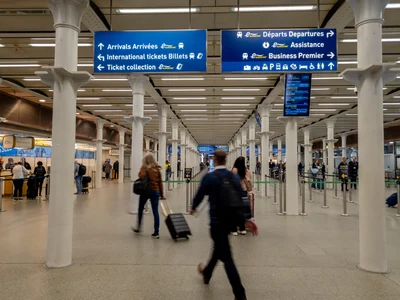
This process centered on a digital travel credential saves time for both travelers and border control agents, as the biometric corridor can process an identity verification in 10 to 15 seconds,” while at a traditional checkpoint the verification process takes between 30 to 45 seconds per person. This may not seem like a big difference at first glance, but when you multiply the seconds saved by the hundreds of thousands of travelers who use the transportation terminals every day, the result is several hours saved in lines and waiting.
Although this technology is not yet in use in Latin America, it promises to save time, improve the user experience and security at border checkpoints and provide a seamless travel experience for all. Global secure ID provider Entrust and Intexus plan to implement this revolutionary travel technology in our region in the near future.